
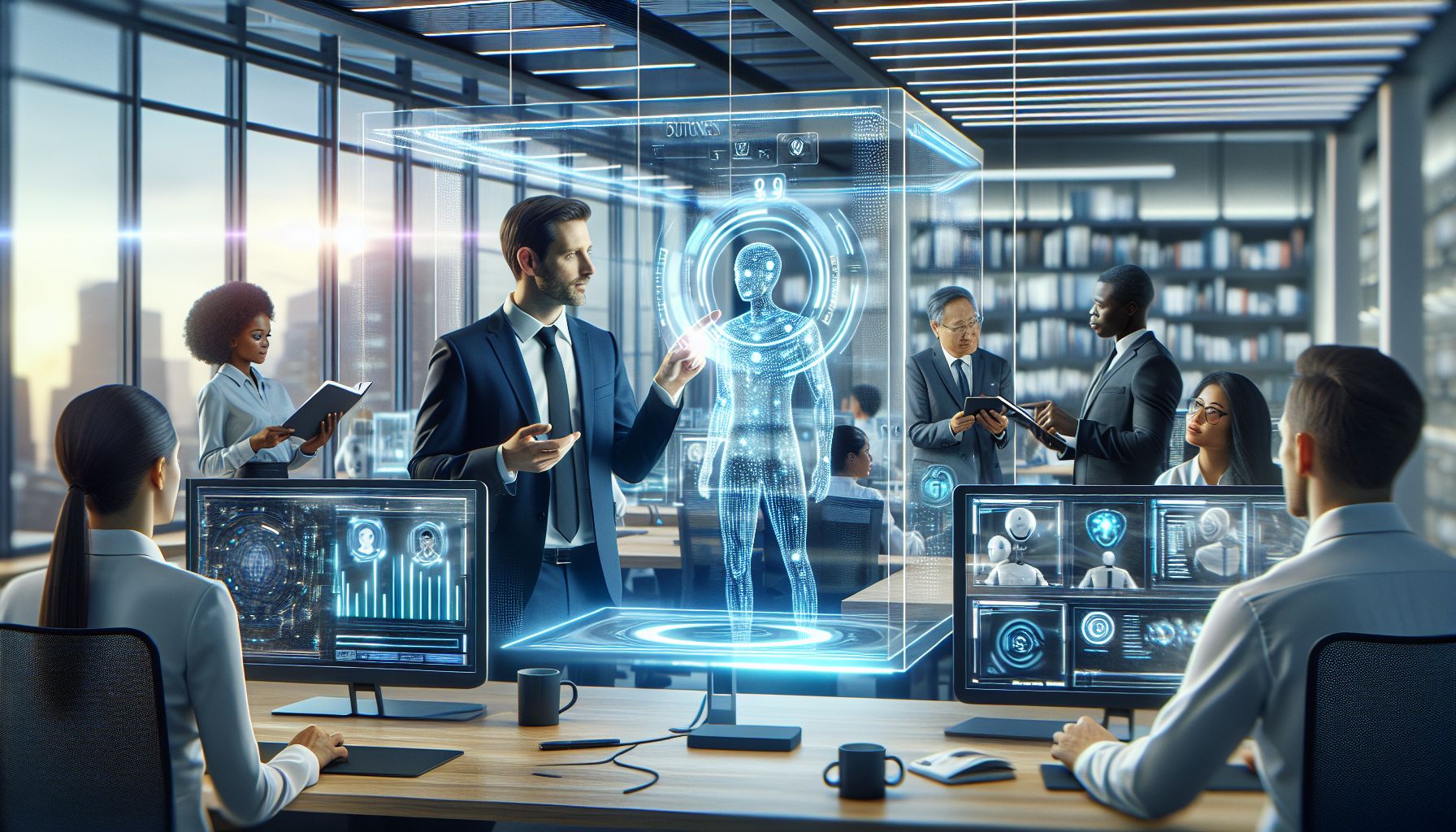
Artificial Intelligence is rapidly reshaping our world, leading to questions about the future of work. With advancements in AI technology, many fear for their job security. This article dives into how AI will affect employment, the sectors at risk, and how professionals can adapt to this new landscape while leveraging AI to enhance their careers.
Understanding AI and Its Evolution
Artificial intelligence (AI) is a branch of computer science focused on creating systems that can perform tasks typically requiring human intelligence. Its journey began in the mid-20th century, starting with simple algorithms and rule-based systems. Key milestones in AI development include the advent of machine learning, which enables computers to learn from data.
Over time, AI has evolved, branching into various domains such as natural language processing and robotics. The introduction of deep learning techniques in the 2000s revolutionized AI capabilities. Companies began harnessing AI to analyze vast data sets, driving innovation across fields like healthcare, finance, and entertainment.
Today, AI plays a crucial role in automating repetitive tasks, enhancing decision-making, and personalizing experiences. From customer interactions powered by chatbots to predictive analytics in marketing, AI’s presence is growing. Businesses are leveraging this technology to optimize operations and improve customer engagement.
The potential of AI continues to expand as it integrates with other technologies, creating smarter and more efficient systems. This evolution prompts discussions on the future workforce, touching on the balance between job displacement and new opportunities. For an in-depth look into how AI is influencing various fields, consider exploring this resource on AI in marketing.
The Job Market Landscape Today
The job market is undergoing significant changes due to AI integration. Many sectors have already witnessed substantial transformations, particularly in manufacturing and customer service. Automation has streamlined processes, leading to increased efficiency. For instance, in manufacturing, robots now perform repetitive tasks that were once completed by humans. This trend has resulted in lower costs but also job displacements for many workers.
Statistics indicate that AI may replace numerous jobs in various industries. According to recent forecasts, nearly 25% of jobs could be at risk of automation in the next decade. Fields like retail also feel the impact, with predictive analytics enhancing inventory management while minimizing the need for human input.
Customer service channels are not immune either. Advanced chatbots and virtual assistants are handling inquiries that traditionally required human agents. As a result, businesses experience shorter response times, which can improve customer satisfaction. However, with these efficiencies comes a notable decline in job availability for customer service representatives.
To summarize, the job market landscape is evolving rapidly as AI continues to make its mark. Understanding these shifts will be essential for navigating the future job market. For further insights into employment in the AI era, check out this article.
Jobs at Risk: Which Positions Are Most Vulnerable?
The march toward AI automation poses both challenges and changes in various job sectors. Positions that consist of routine and repetitive tasks are typically more vulnerable to replacement. Think of assembly line workers, retail cashiers, or even data entry clerks. These roles involve standardized tasks and can be efficiently completed by AI and robotics. For instance, self-checkout machines in supermarkets have reduced the need for numerous cashiers, showcasing how AI impacts job availability.
Conversely, roles that require creativity and human interaction remain less susceptible. Jobs that demand emotional intelligence, complex problem-solving, or personal connection, such as therapists, teachers, or creative professionals, are still safe—for now. The human touch adds a unique quality that AI cannot easily replicate.
In sectors like logistics, automated systems are increasingly taking on tasks such as inventory management. Amazon, for example, relies on AI-driven robots to streamline warehouse operations. This shift has proven efficient but raises questions about the future of human employment in those roles.
It’s essential to identify which jobs are at risk. By understanding these trends, workers can proactively adapt and focus on relevant skills that AI cannot easily replace. This transition points towards a mixed future, where human skills and AI enhance one another. For a deeper dive into the potential of AI in various sectors, explore this article.
Opportunities Created by AI in the Workforce
AI’s impact on the workforce isn’t limited to simply replacing roles; it’s also creating new opportunities. As industries evolve, we see a surge in professions that didn’t exist a decade ago. Data analysts are vital for extracting insights from the mountains of information generated daily. Similarly, AI trainers help machines understand human nuances, ensuring user satisfaction. Beyond these roles, positions like AI ethicists and machine learning engineers are emerging.
Moreover, as AI technologies integrate deeper into our daily operations, the demand for skilled professionals in these fields will only grow. However, this shift also highlights a critical need for upskilling and reskilling the current workforce. Those working in traditional roles must adapt quickly to stay relevant. Embracing continuous education is not just beneficial; it’s essential for survival in the job market.
Organizations are investing more in training programs that focus on digital skills, ensuring their employees can thrive alongside AI. It’s a symbiotic relationship. As humanity moves forward, those willing to learn and adapt will find themselves at the forefront of innovation. For a deeper dive into how AI is reshaping new job sectors, explore this insightful article.
Strategies for Professionals: Adapting to Change
Embracing the inevitable changes brought on by AI is essential for career resilience. Start by committing to continuous learning. This means seeking out online courses, webinars, and workshops tailored to your industry. Familiarize yourself with AI tools relevant to your field, which can boost your efficiency. Collaborate with peers in your domain to exchange knowledge and insights about these advancements.
Diversifying your skill set is also crucial. Focus on developing both technical skills, like data analysis or coding, and soft skills, like emotional intelligence and communication. This combination makes you adaptable and valuable in evolving job markets. Create a personal development plan that sets clear goals for acquiring new competencies.
Consider joining professional organizations or networking groups. These can provide access to training, mentorship opportunities, and resources that keep you informed. Leverage social media platforms to follow thought leaders and engage in discussions that broaden your understanding of AI and its implications.
Seek out resources like online learning platforms and industry-related blogs for ongoing education. A proactive approach to adapting will not only mitigate job displacement risks but also unlock new avenues for career growth in an AI-driven workplace. Your willingness to adapt is your greatest asset.
The Future of Marketing in the Age of AI
Marketing strategies are undergoing a remarkable transformation thanks to AI. Businesses are increasingly adopting personalized marketing techniques. By leveraging AI, companies can analyze consumer behavior and preferences, delivering tailored content that resonates. This approach not only boosts engagement but also enhances customer loyalty.
Predictive analytics takes it a step further. It allows marketers to forecast trends and customer needs. By analyzing vast data sets, AI can identify patterns. With these insights, businesses can be proactive rather than reactive. This forward-looking strategy is essential for staying one step ahead of the competition.
Automated customer interactions are becoming the norm. AI-driven chatbots and virtual assistants are streamlining communication, providing instant support any time of day. These tools can handle multiple queries simultaneously, thereby enhancing efficiency and customer experience.
Yet, amid these advancements, a comprehensive content strategy is key for visibility in search engines like Google. Quality content that aligns with user intent drives traffic and improves rankings. Marketers should focus on creating relevant, engaging content that meets the evolving needs of their audience. This balance of AI-driven insights and quality content will define the future of marketing. For more on digital marketing trends shaping 2025, check out digital marketing trends shaping 2025.
Engage with an Expert
Engaging with industry experts is a crucial step as the job market transforms. With artificial intelligence reshaping industries, understanding your unique business needs becomes more vital than ever. The future of work will require tailored strategies to stay ahead of the curve.
Experts can provide insights that may not be apparent from the sidelines. They possess the experience and knowledge to guide you through complex changes. For example, they can help you assess which roles may be automated and how to leverage technology effectively. This tailored advice allows businesses to adapt and overcome challenges that AI introduces.
Moreover, industry professionals can clarify how to integrate AI tools into existing workflows. As marketing strategies evolve, aligning them with AI capabilities can enhance outreach and efficiency. Professionals can help tailor your marketing campaigns to target specific demographics effectively.
Don’t hesitate to initiate conversations with these experts. They can illuminate the path for not just survival, but success in a rapidly changing employment landscape. The insights you gain from these discussions can shape your approach, ensuring that you’re not just keeping up, but thriving amidst the rise of AI. For more on navigating digital marketing trends, check out Digital Marketing in 2025.
Conclusion
The rise of AI will undoubtedly change the job landscape, but it is not solely a threat. By understanding AI’s capabilities and integrating them into our work, we can enhance productivity and create new opportunities. Embrace this technology to adapt to future challenges in marketing.


Comments are closed.