
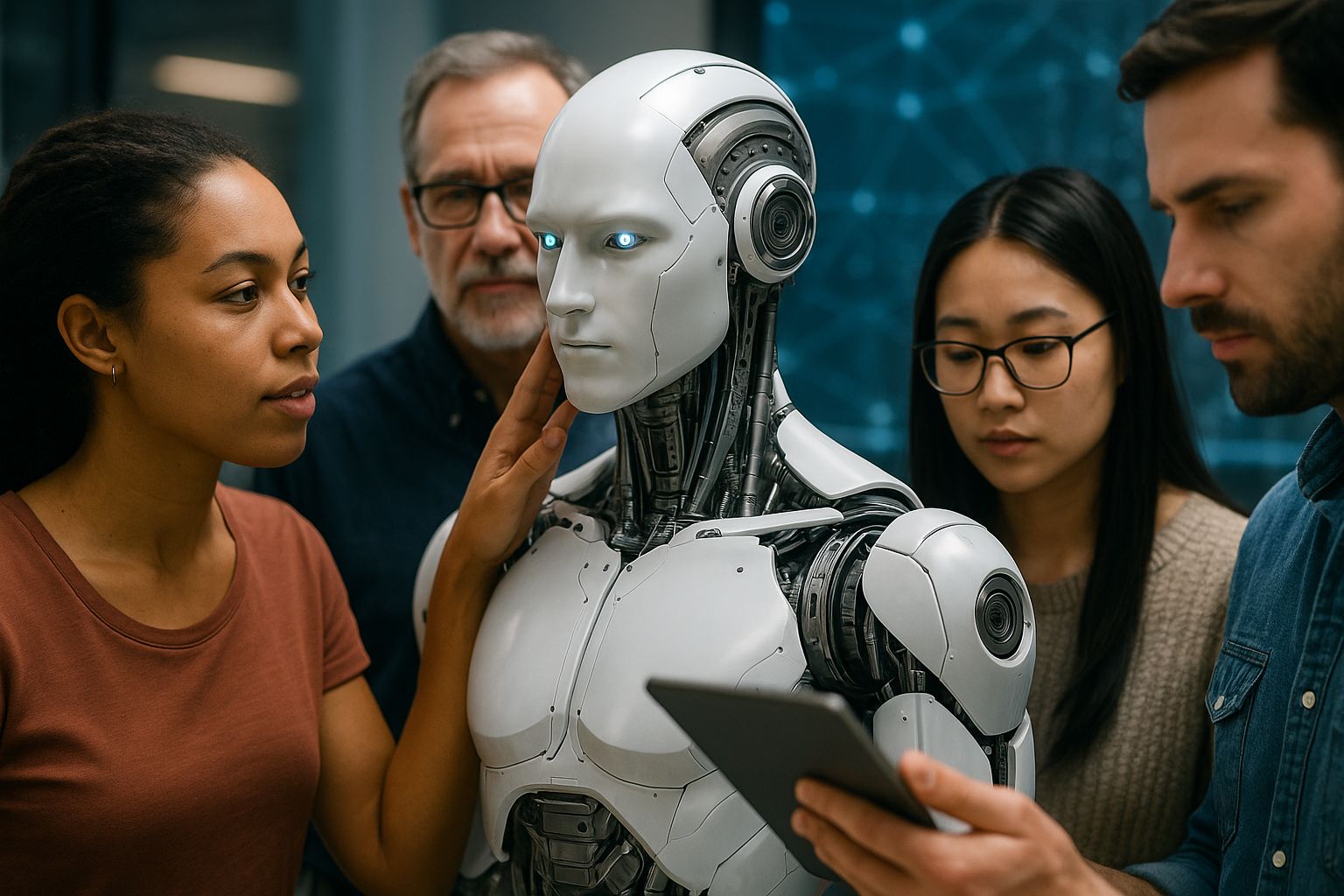
The intersection of artificial intelligence and humanity raises profound questions about our future. As AI technologies continue to advance, they blend seamlessly into daily life, aiming to augment human capabilities rather than replace them. This exploration delves into whether AI is indeed the next evolutionary step for humankind.
Understanding Evolution
Evolution is the slow dance of life, where change is constant. At its core, evolution is about adaptation. Species develop traits over generations that enhance their chances of survival.
Consider the term “fitness.” It doesn’t mean being fit in the gym. It’s about how well-suited an organism is to its environment. The organisms that survive are the ones who adapt.
Now, look at human history. Our ancestors harnessed fire, invented tools, and built civilizations. Each technological leap pushed humanity forward. Technologies like the wheel or printing press revolutionized communication and transportation. They exemplified how innovations drive us to evolve.
In simpler terms, the technologies we develop are extensions of our evolution. They enhance our abilities, allowing us to solve problems in ways once unimaginable. As we continue to innovate, we shape not just our future, but also our essence as a species. This intersection of evolution and technology is where the real magic lies. For more insights on the evolution of technology and its impact, check out this blog.
The Rise of Artificial Intelligence
The journey of artificial intelligence spans decades, each marked by key breakthroughs that paved the way for its current prominence. Early explorations date back to the 1950s when researchers initiated code for basic problem-solving algorithms. Fast forward to the 1990s, and we witnessed AI defeating world champions in chess, a clear signal of its potential.
The 2000s ushered in advancements in machine learning, making it possible for systems to learn from data rather than just follow programmed rules. The development of neural networks simulated human brain functionality, with large datasets becoming more widely available.
In recent years, innovations such as deep learning have revolutionized areas from image recognition to natural language processing. AI has begun to blend seamlessly into daily life, influencing everything from online recommendations to medical diagnostics. These milestones highlight not just technological evolution but also AI’s growing role in shaping our society. For more on how advancements like these integrate into our lives, check out this article on the rise of generative AI.
AI as an Extension of Human Capability
AI operates as an incredible extension of human capability, supercharging our inherent strengths. Decision-making benefits immensely from AI’s analytical prowess. By processing vast amounts of information in a fraction of the time, AI helps individuals and organizations make informed choices rapidly. In healthcare, AI analyzes patient data, predicting outcomes and personalizing treatment plans that enhance patient care. In education, adaptive learning platforms tailor educational content to the unique needs of each student, driving engagement and retention.
Efficiency is another significant area where AI shines. Business operations leverage automation for mundane tasks, freeing up human talent for higher-level strategic initiatives. Supply chain management utilizes predictive analytics to forecast demand and optimize logistics, reducing costs while improving service. These applications highlight AI’s value in various sectors, demonstrating its role not just as a tool but as a vital collaborator in extending human potential. For further insights on harnessing AI for business growth, check out this article.
Ethical Considerations of AI
Ethical dilemmas are at the forefront of AI development. With incredible benefits come significant risks. One key concern is bias. Algorithms can perpetuate or amplify societal prejudices. This can lead to unfair treatment of individuals and groups in critical areas like hiring and law enforcement.
Transparency is another issue. Many AI models operate as black boxes, making it challenging to understand their decisions. When people can’t comprehend how AI arrives at conclusions, trust erodes. Furthermore, there’s the risk of misuse. Bad actors can leverage AI for malicious purposes, such as deepfakes or surveillance.
To navigate these challenges, responsible AI usage is vital. This involves clear guidelines and an ethical framework. Developers, organizations, and users must work together. It’s crucial to balance innovation’s excitement with ethical considerations. Striving for fairness, accountability, and transparency can harness AI’s power while mitigating potential harm. For more on navigating these dilemmas, check out this article on the AI dilemma.
AI and the Future Workforce
AI is changing how we think about work. The evolution of automation means some jobs may vanish, while others will transform. Low-skilled tasks are most vulnerable, making adaptability crucial. It’s not just about holding on to current positions but evolving with emerging roles.
The workforce will demand a new set of skills. Creativity, emotional intelligence, and complex problem-solving will shine in the AI age. These uniquely human traits can’t be mimicked by machines. Workers need to embrace upskilling and continuous learning to stay ahead. Education isn’t a one-time thing; it’s a lifelong journey.
Businesses that prioritize employee development will thrive in this transition. They understand upskilling isn’t just beneficial – it’s essential for survival. Organizations can foster a workforce ready for AI integration. Focusing on personal growth and initiative will lead to innovative solutions. To delve deeper into the impact of technology on the job market, check out this article on the future of employment in the AI revolution: future of employment in AI revolution.
Human-AI Collaboration
Human-AI collaboration isn’t just a buzzword—it’s a game-changing reality for businesses. When humans and AI work together, magic happens. Let’s take a look at how this collaboration enhances efficiency and sparks creativity.
Imagine a marketing team equipped with AI tools that analyze customer data in seconds. Instead of spending hours poring over spreadsheets, they can focus on devising impactful campaigns. AI helps identify trends that might go unnoticed, allowing creative ideas to flow freely.
A retail business may also leverage AI for inventory management. By predicting demand more accurately, they minimize stockouts and overstock situations. This means products are available when customers want them. The result? Happier customers and increased sales.
In another realm, design teams can use AI for inspiration. Imagine generating multiple variations of a concept in a heartbeat. This opens up avenues for fresh ideas that human designers can refine.
These successful integrations validate the idea that together, humans and AI can achieve what neither could do alone. Dive deeper into how AI is inspiring a new era of creativity to see this collaboration in action.
The Social Implications of AI
AI is reshaping the fabric of society. Communication has evolved beyond traditional means. Messages can now be transmitted instantaneously, creating an expectation for constant connectivity. This change fosters a culture of immediacy but can lead to misunderstandings. Without face-to-face cues, conversations may lack depth.
Relationships are also transformed. Texts and emojis have replaced heartfelt letters. While connection is easier, personal intimacy may diminish. People can feel isolated even in crowded virtual spaces. This paradox begs the question of what genuine connection means in an AI-influenced world.
Lifestyles are rapidly changing too. Automation and AI efficiency modify our daily routines. Tasks once done manually are now streamlined, offering more free time—but at what cost? As we adapt, we must consider the balance between convenience and authenticity in our interactions.
For a deeper understanding of these dynamics, check out this insightful resource on how digital communication is evolving.
Preparing for an AI-Driven World
Preparing for an AI-Driven World means embracing change. Individuals and companies can start by educating themselves about AI. Knowledge is power. Attend workshops, read articles, and follow thought leaders. This will demystify AI, helping to understand its potential.
Once familiar, assess how AI can fit into your personal and professional life. Identify workflows that could benefit from AI integration. Focus on enhancing efficiency and effectiveness. Companies should pilot small AI projects to understand operational impact without full commitment.
Diversity in teams is critical to tackling AI challenges. Assemble varied experts to examine AI’s ethical implications and ensure inclusivity. Also, prioritize cybersecurity measures. AI poses unique risks to data integrity and privacy.
Finally, keep an open mindset. Flexibility is essential. As AI evolves, so will your strategies. Embrace the technology while remaining aware of its potential pitfalls. Remember, being proactive shapes the future. For more on key AI trends, you can explore top digital marketing trends.
A Consultation for Your Business Growth
The key to business growth lies in tailored solutions. AI’s transformative potential demands that companies ensure their strategies are adaptive and personalized. That’s where consultation comes into play. Seeking expert advice helps pinpoint your unique needs and challenges.
Every business has its own DNA, and a one-size-fits-all approach just won’t cut it. You need services that integrate AI seamlessly into your operations, enhancing efficiency while minimizing overhead. Consulting can uncover actionable insights, helping you make informed decisions that propel your business forward.
It’s crucial to have conversations that delve into your goals and expectations. Let’s be real—growing your business isn’t just about the tools you use; it’s about the strategy behind them. By talking through what you truly need, you can develop a customized framework that sets you apart from the competition. Don’t leave your future to chance; consider partnering with professionals who understand AI’s capable range. For more insights, check out Maximizing Business Growth with AI.
Conclusion
AI poses significant implications for humanity, offering solutions that can enhance our lives. Embracing this evolution requires thoughtful consideration of its impacts and potential. Understanding these dynamics is crucial for navigating our next steps in coexistence with AI.


Comments are closed.